




Heat Press Machines
Heat Presses for Professional Textile Printing and Garment Decoration
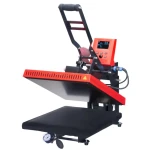
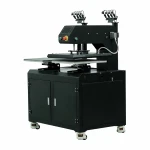
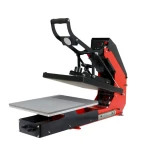
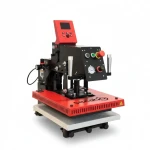
At SignProduction, you will find a wide selection of professional heat press machines and transfer presses for textile printing and garment decoration. A heat press uses controlled temperature, pressure and pressing time to transfer logos, lettering, images and designs onto T-shirts, workwear, sportswear, bags and other suitable products.
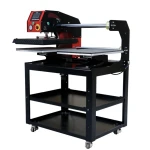
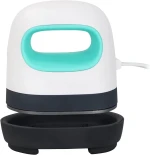
Our range includes compact machines for new businesses and smaller productions, as well as professional heat presses for companies requiring greater capacity and consistent results. Choose from manual, semi automatic, automatic and pneumatic heat presses, together with specialist machines for caps, mugs, tumblers and other personalised products.
Heat presses can be used with several popular transfer methods, including textile foil, transfers produced with DTF printers and designs created using sublimation printers.
- Textile foil: Apply logos, names, lettering and numbers using flex foil, flock foil, glitter foil, reflective foil and other effect materials.
- DTF transfers: Apply detailed and colourful designs to cotton, polyester and compatible textile blends.
- Sublimation: Transfer designs onto polyester textiles and specially coated products.
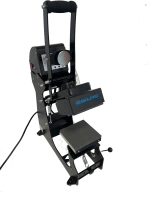
- Specialist products: Decorate caps, mugs, tumblers, bags and other suitable items using the correct press or attachment.
- Professional production: Choose manual, automatic, pneumatic or dual station machines according to your production volume and workflow.
For textile foil production, the heat press can be combined with a cutting plotter that cuts the design before it is transferred onto the textile. Stable heat distribution, accurate temperature control and consistent pressure are essential for creating durable and professional results.
The right machine depends on your transfer method, product size, production volume, available workspace and preferred level of automation. You can also explore our heat press accessories or ask us to help assemble a complete textile printing solution.
Contact us on +44 2036300130 or by email if you need help choosing the right heat press.
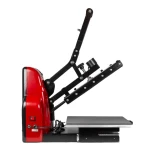
![Standard Heat Press [38x38cm]](/img/6/150x150/92075_1392740.jpg "Standard Heat Press - 38x38cm")
![Standard Heat Press [38x38cm]](/img/6/150x150/92075_1392745.jpg "Standard Heat Press - 38x38cm")
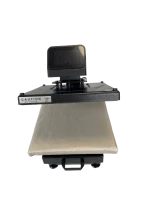
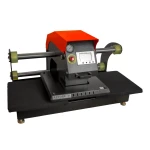
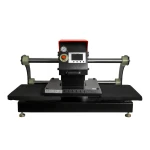
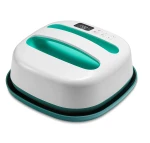
How Does a Heat Press Work?
A heat press, also known as a transfer press or heat transfer press, uses a combination of controlled heat, pressure and pressing time to apply a design or transfer to a suitable textile or product.
The upper heated platen heats the transfer material while pressure holds the transfer against the surface. When the correct temperature and pressing time are used, the adhesive or ink within the transfer can bond correctly to the product.
The required settings depend on the transfer material, textile composition and application. DTF transfers, textile foil and sublimation products can all require different temperature, pressure and pressing times.
Always follow the application instructions provided by the manufacturer of the transfer material and perform a test application when working with a new material or product.
Types of Heat Press Machines
Different heat press designs are available for different production requirements. The most suitable machine depends on your products, transfer method, production volume, available workspace and budget.
Manual Heat Presses
Manual heat presses are operated directly by the user and are a popular choice for beginners, small businesses, schools, workshops and lower production volumes.
They provide a simple and flexible way to apply heat transfers to garments without requiring compressed air or complex installation.
Semi Automatic Heat Presses
Semi automatic heat presses reduce some of the manual work involved in the pressing process. Depending on the model, the machine can automatically open when the selected pressing time has elapsed.
This can make repeated production more convenient and help prevent transfers from being exposed to heat for longer than intended.
Automatic Heat Presses
Automatic heat presses are designed to reduce manual handling during repeated production. Features such as automatic opening can improve workflow and make the pressing process more consistent.
They are particularly useful for businesses processing regular orders and producing multiple garments in succession.
Pneumatic Heat Presses
Pneumatic heat presses use compressed air to generate the pressing force. They are designed for professional production environments where a large number of products are pressed regularly.
The controlled pressing force can provide consistent results while reducing the physical effort required from the operator.
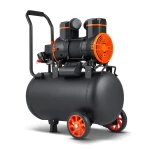
Pneumatic heat presses normally require a suitable compressor. Before purchasing a pneumatic machine, check the required air pressure, air consumption and compressor specifications.
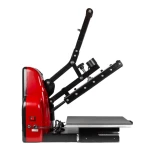
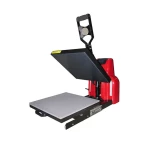
Clamshell Heat Presses
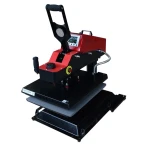
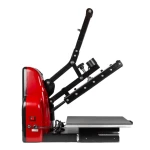
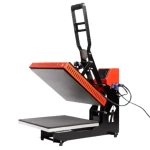
Clamshell heat presses open upwards, with the heated upper platen moving towards the lower platen during operation.
Their compact design makes them suitable for smaller workshops and areas where workspace is limited. They are commonly used for T-shirts, hoodie, workwear, bags and other flat products.
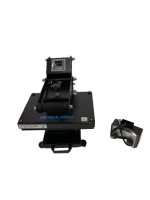
Swing Away Heat Presses
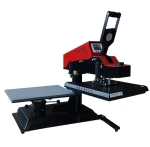
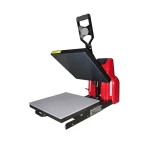
Swing away heat presses allow the heated upper platen to move away from the working area when the machine is open.
This provides easier access to the lower platen and can make positioning garments and transfers more convenient and accurate.
Swing away machines generally require more surrounding workspace than clamshell models because the upper platen needs room to move to the side.
Dual Station Heat Presses
Dual station heat presses have two separate working areas. While one product is being pressed, the operator can prepare the next product on the second station.
This can significantly improve workflow during larger production runs by reducing the time spent waiting between pressing cycles.
Choosing the Right Heat Press
The best heat press depends on what you intend to produce and how frequently you will use the machine. Before choosing a model, consider the transfer method, product size, production volume, available workspace and the level of automation you require.
What Will You Use the Heat Press For?
Heat presses can be used for many different applications, including:
- T-shirts and hoodies
- Workwear and company clothing
- Sportswear and team uniforms
- Bags and Tote bags
- DTF transfers
- Heat transfer vinyl and textile foil
- Sublimation garments
- Caps and hats
- Mugs and other personalised products
If you intend to work with several different applications, a versatile flat heat press or multifunction machine may be the most practical option.
How Much Will You Produce?
Production volume is one of the most important factors when choosing a heat press.
For occasional use and small orders, a manual machine may provide everything you need.
For regular business production, a semi automatic or automatic machine can improve workflow.
For high volume production, pneumatic, automatic and dual station machines can reduce manual effort and increase production efficiency.
How Much Workspace Do You Have?
The physical size and opening mechanism of a heat press should be considered before purchase.
Clamshell presses generally require less space because the upper platen opens vertically.
Swing away presses require additional space to the side because the heated platen moves away from the working area.
Larger professional machines also require sufficient space around the machine for safe operation and efficient workflow.
What Size Heat Press Should You Choose?
The platen size determines the maximum area that can normally be pressed in a single operation.
Smaller heat presses are useful for smaller logos, names, sleeves, children's clothing and compact products. Larger machines provide more flexibility for T-shirts, hoodies, large chest designs and back prints.
Common heat press sizes include 38 × 38 cm and 40 × 50 cm, while larger professional models are also available.
When choosing a platen size, consider the largest designs you expect to produce rather than only your current requirements. A larger platen can provide greater flexibility as your business grows, although it will also require more workspace.
Heat Presses for DTF Transfers
DTF, or Direct to Film, is a popular transfer method for producing detailed and full colour designs on textiles.
The design is printed onto a special film and combined with a heat activated adhesive before being transferred onto the garment using a heat press.
A reliable heat press is important for DTF because the transfer needs to receive the correct temperature and consistent pressure across the entire design.
A heat press can be used with both DTF transfers produced in house and ready made DTF transfers purchased from a supplier.
When choosing a heat press for DTF, consider the platen size, temperature control, pressure adjustment, pressing time and expected production volume.
For larger DTF production, automatic or pneumatic heat presses can provide a more efficient workflow.
Heat Presses for Textile Foil and Heat Transfer Vinyl
Heat transfer vinyl and textile foil are commonly used for applying logos, lettering, names and numbers to garments.
The design is usually cut using a cutting plotter before the excess material is removed. The finished design is then positioned on the garment and applied using a heat press.
Different textile foils require different application settings. Luminous, magnetic, fluorescent, transparent, reflective, metallic and special foils can all have different temperature, pressure and pressing time requirements.
Always follow the manufacturer's instructions for the specific material being used.
Heat Presses for Sublimation
Sublimation is a transfer printing process commonly used for polyester textiles and specially coated products.
It is widely used for sportswear, personalised clothing, mugs, mouse pads, puzzles, bottles, keychains, and other suitable products.
Consistent heat distribution is particularly important for sublimation. Uneven heating can result in differences in colour or image quality across the finished product.
When selecting a heat press for sublimation, consider the size and type of products you intend to produce as well as the required temperature range and platen size.
Heat Press Maintenance
Consistent maintenance can help keep a heat press operating correctly and contribute to consistent production results.
Regular servicing and calibration can help maintain the performance and accuracy of your heat press. Our Service team can assist with maintenance, calibration and replacement parts to help keep your equipment operating reliably.
Heat Press Buying Guide
When choosing a heat press, consider the following factors:
Application
Determine whether you will primarily use the machine for DTF, textile foil, sublimation or several different transfer methods.
Platen Size
Choose a platen large enough for the largest designs and products you expect to produce.
Production Volume
Consider how many products you expect to press each day and whether your production volume is likely to increase.
Automation
Manual machines can be suitable for smaller production volumes, while automatic and pneumatic models can provide advantages during repeated professional production.
Available Space
Consider both the physical dimensions of the machine and the additional space required to operate it safely.
Future Requirements
Choose a machine based not only on what you produce today but also on the products and production volumes you may want to handle in the future.
Frequently Asked Questions About Heat Press Machines
1. What is a heat press machine used for?
A heat press is used to transfer designs, logos, text, images and other graphics onto suitable textiles and products using controlled heat, pressure and pressing time.
Common applications include T-shirts, hoodies, workwear, bags, tote bags, sportswear, caps, mugs, DTF transfers, textile foil and sublimation.
2. What is the best heat press for T-shirts?
The best heat press for T-shirts depends on the size of your designs and your expected production volume.
A 38 × 38 cm machine is suitable for many standard T-shirt applications, while a larger 40 × 50 cm or larger platen provides more flexibility for large designs.
For higher production volumes, an automatic, pneumatic or dual station machine may be more suitable than a basic manual press.
3. Can I use the same heat press for DTF and textile foil?
Yes. A suitable flat heat press can generally be used for both DTF transfers and textile foil.
However, each transfer material may require different temperature, pressure and pressing time settings.
4. Can you use a heat press for sublimation?
Yes. Heat presses are commonly used for sublimation onto polyester textiles and specially coated products.
The machine should provide suitable temperature control and even heat distribution for the intended application.
5. What is the difference between a clamshell and swing away heat press?
A clamshell heat press opens upwards and generally requires less workspace.
A swing away heat press moves the heated platen away from the lower working area, providing easier access when positioning products.
The best choice depends on your workspace, products and preferred workflow.
6. Are pneumatic heat presses better?
Pneumatic heat presses can be advantageous for professional and high volume production because they use compressed air to generate consistent pressing force and reduce the physical effort required from the operator.
They are not necessarily the best choice for every user. For smaller production volumes, a manual or automatic electric machine may be more practical.
7. What size heat press should I buy?
Choose a platen size based on the largest designs and products you expect to produce.
A 38 × 38 cm press is suitable for many everyday applications, while a 40 × 50 cm or larger machine provides additional working space.
8. Do I need a compressor for a heat press?
Only pneumatic heat presses normally require compressed air.
Manual and electrically operated automatic heat presses do not normally require a compressor.
Always check the technical specifications of the specific machine before purchasing.
9. Can I use a flat heat press for mugs?
A standard flat heat press is not normally suitable for mugs because the heating surface is designed for flat products.
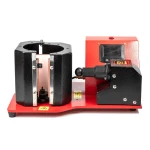
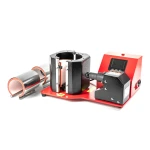
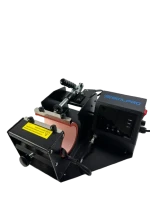
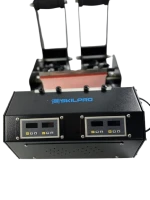
Mugs require a dedicated mug press, suitable heating element or multifunction machine with the correct attachment.
10. What temperature should a heat press be?
There is no single temperature that is correct for every application.
The required temperature depends on the transfer material, textile composition and product being decorated.
Always follow the application instructions supplied with the specific transfer material.
11. How much pressure should a heat press use?
The correct pressure depends on the transfer material and product.
Some materials require light pressure while others require medium or firm pressure.
Always follow the manufacturer's application instructions rather than using the same pressure setting for every material.
12. How long should you press a T-shirt?
The required pressing time depends on the transfer material, garment and application method.
Always use the temperature and pressing time recommended by the manufacturer of the transfer material.
When testing a new combination of garment and transfer, perform a test press before starting a larger production run.
13. Is a heat press worth buying for a small business?
A heat press can be a useful investment for businesses producing personalised clothing, workwear, sportswear, promotional products and other customised items.
For smaller businesses, a manual or semi automatic machine can provide a relatively simple way to start producing garments in house.
As production increases, upgrading to an automatic, pneumatic or dual station machine can improve workflow and reduce manual effort.
14. What is the best heat press for beginners?
For beginners, a manual heat press with a suitable platen size can provide a straightforward and flexible starting point.
If you expect your production volume to increase, a semi automatic or automatic model may provide additional convenience and efficiency.
Professional Heat Presses from SignProduction
Whether you are starting a small textile printing business or expanding an established production facility, choosing the right heat press can make a significant difference to your workflow and results.
At SignProduction.co.uk, our range includes heat presses for DTF transfers, textile foil, sublimation, T-shirts, workwear, sportswear and other textile printing applications.
If you are unsure which machine is suitable for your requirements, consider the products you intend to decorate, your expected production volume, required platen size, available workspace and preferred level of automation.
You can also combine your heat press with our range of cutting plotters, textile foil, DTF printers, sublimation printers, textiles and heat press accessories to create a complete textile printing solution.
Our customer service team can help you choose a heat press and compatible materials suited to the products you want to make. We provide free support before and after your purchase, with practical guidance to help you get started and make the most of your equipment. Contact us on +44 2036300130 or email [email protected] to discuss your requirements.